
Community
James Talarico and Gina Hinojosa's post-election celebration couldn't be more Texas
By James “Jimmy” Carter
Advertisement · Why this ad?
Jamal, a proud graduate of the University of Houston, has been covering the Dallas Cowboys and Mavericks for over eight years. His experience includes stints at ESPN and local radio stations, where he honed his ability to connect with fans and convey the pulse of the city’s sports culture.
More from Jamal →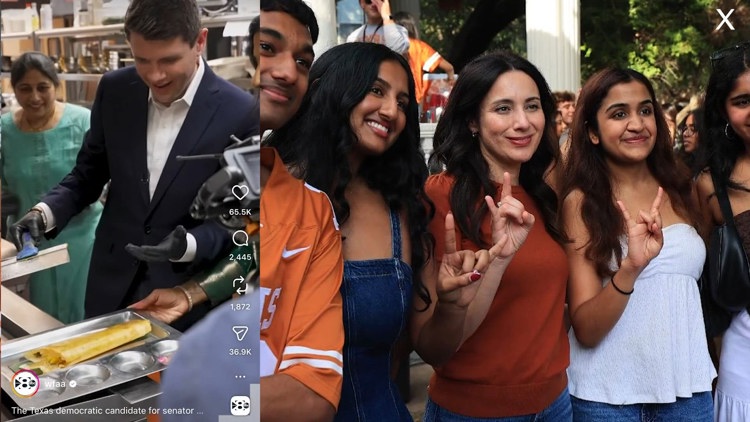
As the sun set over the vibrant streets of Dallas, a palpable energy filled the air. Families gathered at a local community center, where laughter mingled with the smell of spicy samosas and chai. But this was no ordinary gathering; it was a celebration of unity and resilience. South Asian Texans, a community often overlooked in political conversations, were coming together to push back against a wave of anti-immigrant rhetoric that had recently swept through the state. The atmosphere was electric, and the stakes were high.
In the wake of controversial remarks made by Bo French, a local political figure, the South Asian community found their voices amplified. French's comments, deemed offensive by many, served as a catalyst for mobilization. The backlash was swift and fierce, with community leaders and activists rallying to condemn the rhetoric that sought to divide rather than unite. This moment marked a turning point, showcasing the South Asian community's growing political muscle in Texas.
The 2022 elections were a watershed moment for South Asians in Texas, culminating in the historic election of the state’s first Indian American House member, Nishad Singh. His victory was not just a personal achievement but a symbol of progress for a community that has long been underrepresented in political offices. Singh's campaign resonated with voters, emphasizing inclusivity and the importance of diverse voices in shaping policy.
As the community gathered to celebrate this milestone, the message was clear: hate had no place in Texas. The South Asian Texans were determined to stand against the tide of negativity and instead promote a narrative of hope and unity. They were no longer content to be silent; they were ready to advocate for their rights and the rights of all marginalized communities.
The response to French's remarks ignited a wave of activism across the state. Community members organized rallies, wrote letters to local newspapers, and engaged with their elected officials. The sentiment was echoed by civil rights organizations that highlighted the importance of standing against hate. The South Asian community was not just reacting; they were taking proactive steps to ensure their voices were heard.
At a recent town hall meeting, community leaders shared personal stories that illustrated the impact of anti-immigrant sentiment. One speaker, a local business owner, recounted how derogatory comments had affected her family and her ability to operate her business. "We are not just statistics; we are families, we are dreams, and we are contributors to this great state," she passionately declared. This sentiment resonated deeply, inspiring many in attendance to share their own experiences.
Local organizations, such as the South Asians for Change, played a crucial role in mobilizing the community. They provided resources, organized training sessions on civic engagement, and encouraged individuals to register to vote. The message was clear: empowerment starts with participation, and every vote counts.
The significance of this mobilization cannot be overstated. For years, the South Asian community in Texas has been a silent observer in the political landscape, often sidelined in discussions about representation and rights. The recent events have ignited a renewed sense of identity and purpose among South Asians, many of whom are first or second-generation immigrants. This community is not just diverse in culture but also in experiences, with members hailing from various professions, backgrounds, and regions of South Asia.
Moreover, the rise of leaders like Nishad Singh is crucial in shaping a future where the voices of South Asian Texans are not only heard but also respected. Singh's election has inspired many young South Asians to consider political careers, seeing firsthand that they too can effect change. This shift in perspective is vital in a state where minority representation has historically lagged.
Looking ahead, the South Asian community in Texas is poised for continued growth and influence. With the recent election victories, there is a renewed sense of purpose among community members. The question now is how to maintain this momentum and ensure that their voices remain at the forefront of political discussions.
Activists are planning a series of initiatives aimed at increasing voter turnout in the upcoming elections. Workshops on the importance of civic engagement, coupled with outreach efforts to educate younger generations about the political process, are on the agenda. The goal is to create a legacy of activism that will empower future leaders within the community.
Moreover, the South Asian community is actively seeking to build coalitions with other marginalized groups. By forming alliances with organizations representing Latino, Black, and other immigrant communities, they aim to create a united front against discrimination and injustice. This collaborative approach not only amplifies their voices but also fosters a sense of solidarity among diverse groups.
As they forge ahead, the South Asian Texans are committed to ensuring that their stories are told and their contributions recognized. They are not just fighting against hate; they are advocating for a future where all families can thrive, regardless of their background. In a state as diverse as Texas, this vision is not just a dream; it is a necessity.
To sustain this momentum, the South Asian community has planned various events and initiatives aimed at fostering unity and engagement. Community leaders are organizing cultural festivals that celebrate South Asian heritage, while also providing a platform for political discourse. These events not only strengthen community ties but also educate attendees on the importance of political participation.
Additionally, mentorship programs are being established to guide young South Asians interested in public service and advocacy. By connecting experienced professionals with aspiring leaders, the community is nurturing the next generation of activists who will carry the torch forward.
In conclusion, the South Asian community in Texas is no longer a silent observer in the political landscape. They are a force to be reckoned with, driven by a commitment to family, faith, and community. As they continue to push back against anti-immigrant rhetoric, they remind us all that love and unity can triumph over hate. The journey ahead may be challenging, but together, they are more than ready to face it.
By James “Jimmy” Carter

By Monica Ramirez
By James “Jimmy” Carter
By James “Jimmy” Carter